Wednesday, January 6, 2010

Christmas in France

The past couple of months have been a whirlwind, I have no idea how the new year snuck up on me so quickly! I have to admit my mindfulness practice has been suffering of late, and with the holidays things got a little hectic.

While K and I had originally talked about going to the US for Christmas, in the end I just wasn't feeling up for it, and the tickets were just too expensive anyway.

Instead we stuck pretty close to home for the Holidays.  Kevin's sister, who also lives in Lyon, hosted the Christmas Eve dinner at her place (dinner on the 24th is just as important as the Christmas meal for a lot of French families, and many even exchange presents that night so they can sleep in the next day!).  And Kevin and I hosted Christmas lunch at our place.

I realized this year that this has only been my second Christmas in France, since I was in the US in 2007, and last year I went to Plum Village on a meditation retreat over Christmas and New Year's.  So I had forgotten that the holidays in France are bit different than in the US, as you might expect.  And the key word is FOOD.  You could even say Slow Food.

For any given meal, you can be almost certain that your average French person will spend much longer at the table than your average American.  This is true for lunch, where many people typically take a 1.5 to 2-hour break and often go to a sit-down restaurant.  But it's especially true for dinner, when an invitation for 8 pm means that you won't likely get to dessert before midnight.  I still have yet to fully adjust to this schedule, since I'm usually starving by the time our host offers us hors-d'oeuvres.  So I stuff myself with the snacks and am totally full by the time the main dish comes around a few hours later. Or if I'm really worried about eating late, I'll sometimes even grab a bite at home before we head out.

Other than the later dinner times, the other part of eating in France that I haven't quite adapted to is the famous French moderation.  Since there will be many courses and the meal with last for hours and hours, people take their time and eat relatively small quantities.  And they drink.  Because for every course there is a specific wine to go with it.  Kevin claims that the alcohol helps to make room for all the food, which is why it flows so freely.  I haven't been able to test that theory myself, because I'm such a lightweight that I would be under the table before the main course if I tried to keep up with the French drinkers!  So instead I continue to scarf down the hors-d'oeuvres in a hunger craze, despite knowing full well that there will be more food, and lots of it!  And later I just feel stuffed and miserable, because of course you have to eat what the cook has prepared so as not to offend them...

If a regular dinner with friends can take hours, just imagine a Holiday meal!  It's the summum of the gastronomic experience, and French amateur cooks everywhere will pull out all the stops to impress their families.  For example, I remember Christmas 2006 at Kevin's grandparent's place, they served foie gras with a lentil sauce and whipped cream in wine glasses. I just had the lentils and cream, and I must admit I felt very chic eating out of a wine glass!

This year we had the big Christmas meal at our place, with Kevin's mom, k's sister and her partner, k's brother and his partner, plus her mom and sister. Luckily Kevin and I weren't expected to cook everything, so it was a bit of a potluck - which is not typical, since the hosts are usually responsible for most if not all of the food.

I believe we started snacking around 1:30 pm, with Foie Gras, the traditional French Christmas treat (the liver of force-fed geese, which is actually illegal in some parts of the US!).  Since I'm a vegetarian I always make something for myself, and went all out American/Tex-Mex:  black bean dip with tortilla chips (a friend had brought over the beans from the US since they're hard to find here). Not exactly a traditional x-mas dish, but the French don't know that!  It was the first time any of them had tasted it, and they all seemed to enjoy it.  Not as much as the foie gras, but what can you do. And Kevin's sister thought of me and made some spinach and goat cheese/ewe's cheese puff pastries that everyone wolfed down (I wasn't the only hungry one....).

With the snacks, which they call the 'apéro' or 'apéritif,' there was Champagne, of course.  While Champagne is obviously much cheaper in France than in the US, it's still somewhat pricey and so considered a drink for special occasions.  For a lot of French families, including Kevin's, it's part of their tradition to drink Champagne with the Christmas meal.  Unfortunately, I actually hate Champagne, much to the shock of any French person I admit that to.  But they get over it quickly, since they realize that it means more for them! Instead I drank an organic bubbly apple and blueberry drink, which I thought tasted much better, but which was much ridiculed!

Here's Kevin's mom getting ready to open the Champagne, in front of our festive table setting (yes there were nine of us squeezed around that tiny table!  Luckily the French are not large people as a general rule):


And here's me drinking my faux Champagne, while kevin scoffs (or maybe he's just making a goofy face, since he hates pictures):


After a Christmas toast and the gift exchange, we finally sat down to lunch around 2:30pm.  This was when the 'entrée' was served, but unlike what you find on American restaurant menus, in France the entrée is actually the appetizer or starter.  Logical, since it comes from the verb 'entrer,' to enter.  So I'm not sure how we manged to adopt that word in English to describe the main dish...

In this case our first course consisted of an onion pie Kevin made, as well as my all-time favorite grated carrot, beet, garlic and parsley salad.  This was another discovery for my French guests, since they typically don't eat beets raw.  In fact, it's pretty hard to buy raw beets, since regular grocery stores only sell them cooked and packaged, and even at the farmer's markets most of the beets are cooked as well.  I thought this was really odd, but Kevin's theory is that beets stain and the French don't like to get their hands dirty...

At some point the Champagne was put away and we switched to red wine, but I can't remember when. During the second course (or what Americans call the 'entrée') we definitely had red wine, which was meant to go with the rabbit stew brought by Kevin's brother's girlfriend's mom (got that?).  Apparently it was farm-fresh, killed-for-the-occasion, and everyone said it was very tasty.  To avoid thinking about the poor bunny I concentrated on my dish, which was the famous 'gratin dauphinois' (basically 'potatoes au gratin' - layers of very thinly sliced potatoes with tons of just about every dairy product imaginable).  It's really time-consuming to prepare so people tend to save it for special occasions, and since it supposedly went well with the rabbit I decided to give it a try with a recipe I found.  Not sure it was the best gratin ever made, especially since I couldn't help but use soy milk/cream and margarine instead of the full dairy versions which gross me out a bit (I did use real eggs and cheese though).  But people ate it all up so I guess it was good enough.  And then we also had a yummy carrot puree with herbes de provence.  So that part of the meal was pretty traditionally French, with no american oddities thrown in (unless you count the soy products, which are a fairly recent arrival in France, though they do cultivate their own non-gmo soybeans).

After the main course there is always cheese and bread, and often a salad as well, and then another kind of wine to go with the cheese.  But everybody seemed too full for the cheese so they just drank the wine and waited a while to make room for dessert.  And that is the key to a French meal.  Waiting.  Food is eaten slowly, forks and knives are put down while people talk; and they talk a lot.  And they eat a little more, and then they talk.  And even after the course is finished, they wait a bit for the next round, to work up an appetite.  And to talk.  And to drink (to make room for more food).   And eventually the next course is eaten, slowly.  I think it was past 6 by the time we had the dessert, a beautiful black forest cake with gooseberries that Kevin's sister made:


When the cake was served the red wine was removed and another bottle brought out:  Clairette de Die, a somewhat sweet sparkling white dessert wine.   I didn't like it either, since I'm really just not a big fan of bubbly wines, and I don't much like white wine in general (though I have come to appreciate a few whites that I've tasted here, namely some Alsatian sweet wines and Muscat de Rivesaltes - for those who may know their wines a bit...).  There was actually a second dessert as well, the traditional 'bûche de noel' or christmas log, but we were too full so I just cut myself a piece and put it aside for later, since I do love it so.  

So there you go, a French Christmas meal spread out over about 5 hours, with many courses and 4 different varieties of wine.  And we managed to get through all that food and drink with no disagreement of any kind, quite the feat for a family gathering!  Afterwards we played pictionary and charades for while, and then everyone went on their merry way, bellies full and spirits high. 


Sunday, November 1, 2009

Halloween in France

I love Halloween.  It's my favorite holiday, probably because there's nothing overtly religious or patriotic about it.  It's just all about dressing up and eating lots of candy - both of which I love.

Unfortunately, I now live in a country that doesn't really celebrate this wonderful night.  Apparently some marketing folks thought they could make some serious cash by promoting Halloween in France a few years back, but after a lot of initial interest it turned out to be just a passing fad.  Nowadays there are celebrations in clubs and a few parties with a Halloween theme, but few trick-or-treaters going door-to-door.  And your average French person doesn't even know when Halloween is exactly, in part because there isn't any outward indication anywhere to remind you - in sharp contrast to the massive media blitz in the US.

My students tell me the lack of interest here is partly related to the fact that it just seems completely over-commercialized, and many French people resist the notion of celebrating what they see as a purely American holiday.  And there's also the fact that it's around the same time as the Catholic Toussaint ('tous saints', or all saints), on November 1st.  It's the day when the French honor loved ones who have passed away by decorating their graves, and I've been told it's the best time to visit a cemetery since they are overflowing with flowers.  It's also the busiest travel day of the year, and the most deadly - sadly ironic given the nature of most of the car trips.

Because the significance of Toussaint in France, some of my students were explaining that it also seems a bit indecent to dress up and have parties that revel in the dark side when so many people are commemorating their dearly departed.  That makes sense to me, but since I grew up with more American traditions than French, I still can't help loving Halloween and wanting to play dress up.  Kevin and I threw a party last year that was so much fun we decided to make it a yearly tradition, and last night's fest didn't disappoint.  

Here are this year's costumes: 
 

When I told my students I was dressing as a flapper, they protested, "but that's not scary!"  The image of Halloween in France is definitely that of 'fright night,' with costumes that are necessarily of witches and vampires and such.  In fact, at last year's party almost all of the French partygoers were dressed as something traditionally frightening - I think there were even 4 zombies!

So I explained that while scary costumes are still the norm, Americans will dress up as just about anything they like, and the more creative the better.  And at this year's party there was much more variety in the costumes - a few skeletons and  ghosts, of course, but also pirates, men in drag, and even a tree! 

But while my costumes usually let me explore my feminine side (and so are more surprising than frightening, since I rarely wear skirts or makeup), I stick pretty close to tradition when it comes to the food and decoration.   One of my favorite parts of the day was making a horrific buffet of all sorts of things that either look inedible, or play off the ghoulish theme.  Here are a couple of pics of my Halloween spread:


It took me all day to put the buffet together, and luckily Kevin's sister was around to help.  But it was so much fun that it was worth it, and my guests seemed really impressed!

With all the dancing, games, and frightful food, not to mention the creative costumes, it was a wonderful night among friends, and a really nice multicultural mix.  And it's also a great way for me to keep in touch with my American traditions now that I live so far from home.


Saturday, October 24, 2009

This is how it is

It's been over a month since I've written, despite my goal of posting once a week.  But while my first impulse is to berate myself for being a slacker, I'm trying to accept that life gets in the way of my best intentions sometimes. 

This fall has actually been pretty tough on me so far.  I came back from vacation totally broke, and then got stressed about being broke, so I've been working a lot in order to replenish my bank account.  I didn't think this would be a problem since I enjoy my job most of the time.  But teaching takes a lot of energy because I have to be "on" all the time.  The extra hours looked good on paper, but I pretty quickly hit a wall as to how much I could actually teach before exhaustion set in.

Add a sudden cold snap with sub-zero temperatures, and no surpsie: I got sick.  A  cold, the flu, or perhaps the 'crud' as a friend recently referred to it; surely my body telling me to slow down.  I canceled some classes, stayed in bed, read a lot, watched tons of movies and American TV shows online (Grey's Anatomy and Private Practice marathon!).  All in all the normal things you do when you get sick.  

Unfortunately, somewhere along the line stagnation set in, and I couldn't get past the wanting to stay in bed feeling.  A few days of well-deserved bed rest morphed into a deep depression, of the kind I hadn't felt in quite a while.  And the worse I felt, the worse I felt - a vicious circle that left me completely stuck, emotionally and physically. My bedroom was both my sanctuary and my prison, and despite kevin's best efforts to get me outside, I persisted in burrowing myself under the covers and feeling alternately angry and sorry for myself.

The reason I started meditating was to help me cope with moments like these, but I was even resiting any kind of mindfulness practice. My zafu sat in the corner untouched, and the timing of my bi-weekly meditation group meant that I went 3 weeks without seeing my sangha*, during a time when I really could have used the support.  I normally have a hard time practicing on my own, which is why the meditation group is so useful.  Yet I was still furious with myself for my inability to meditate, which made me feel even worse.  I couldn't accept that I was having such a hard time because I thought that I should have been past such difficulties.  I had mindfulness tools now, why wasn't I using them?  The only thing I still seemed to be good at was beating myself up...

Luckily, my meditation group finally met last week, and I was able to get myself there.  I still had a hard time meditating, but it helped to just be with the sangha.  However what really got me out of my slump was the mindfulness retreat in the countryside that I attended last weekend.  I was still feeling pretty stuck and didn't want to go, but I had already sent in my check for the housing, so I forced myself to prepare my contribution to the vegetarian potluck (a mediterranean rice and lentil salad plus my zucchini brownies).  

Since nothing seems to happen by chance, the theme of the weekend was reconciliation.  In between lots of different kinds of meditation and bodywork like Chi Gong, a Dharma** teacher named Marc spoke to us about conflict resolution.  While I thought we would learn about resolving conflict with others, and we did, Marc's main lesson was that we must first come back to ourselves.  Before we can hope to resolve a conflict with anyone else, he insisted that we must first understand what we are feeling:  "Why am I angry...hurt...afraid.  What is this about for me?"

One way this understaning can arise is by coming back to our breathing and observing what comes to the surface when we quiet the mind.  And once we recognize how we truly feel, the next step is acceptance.  No  matter how unpleasant or uncomfortable the feelings may be, we must tell ourselves: "this is how it is right now."  Once we can accept that, we can let go of those feelings instead of berating ourselves (like I so often do) or burying the feelings as deep as possible.  And finally we must forgive ourselves.  Marc's point was that it is only when we are able to reconcile with ourselves that we can think about resolving a conflict with someone else.  

 In my case, all of my conflict was internal, which meant that I was the one I had to make up with.  So during those two days of mindfulness I worked on accepting my anger at my depression and my sense of my own weakness, as well as the underlying sadness itself.  And slowly but surely, a huge weight was lifted and I felt like I could breathe more easily again.  I let the anger go, and once that went the sadness fluttered away like a bird let out of its cage. 

It's as easy as that, and just as hard.   I'll probably spend my whole life learning this lesson, but I'm lucky to have teachers like Marc to help me along the way.  


*   A Sangha is a community of people who practice mindfulness, anything from a Buddhist monastery to a meditation group like the one I participate in. 

** Dharma in this sense refers to Buddhist teachings or philosophy

Wednesday, September 16, 2009

From Field to Table

For anyone who grew up in the countryside or has done any farming or gardening, the following story will surely seem banal to you. But having spent most of my life in and around cities or suburbs, I haven't had much opportunity to dig my hands in the dirt.  So I was beyond thrilled during my vacation when I went to the field near Harmony House to harvest my first ever carrots and beets.  I felt a lot like the proverbial kid in the candy shop, except that I was drooling over vegetables instead of sweets.  Look at how gorgeous they are: 


The beets in particular were the biggest I'd ever seen, though you don't get much perspective in this picture.  Charlie, one of the Harmony House residents, explained that he planted them using biodynamic principles, and it seemed to do wonders, at least in terms of size:


After digging up my veggies in the garden, I brought them directly to the kitchen and made one of my favorite salads:  Grated carrots and beets with fresh garlic, olive oil and lemon juice, and lots of parsley (though I think I used basil instead because that's what the garden offered).  From field to table in less than an hour!  Though I eat this dish all the time at home, something about having just harvested the vegetables myself made it all the more satisfying. I could barely contain myself I was so excited, much to the amusement of those around me.  It just brought me so much pleasure to prepare a salad with vegetables that couldn't possibly be any fresher.   


In fact, in the week I spent at Harmony House, almost all the food we ate came directly from their garden or one nearby on loan from Philippe Desbrosses.  I gorged myself on gorgeous tomatoes, many of which were ancient varieties I'd never seen before.  I picked berries and yellow plums straight off bountiful mirabella trees dripping with warm fruit that tasted like sunshine: 


I'd certainly picked fruit before, and even spent childhood summers in Michigan going to the family farm to collect blueberries, which my grandmother then made into everything from pies to pancake syrup.  And in the last CSA I was a part of in Western Massachusetts, I relished going to the farm to pick up our veggies and gather berries in the 'pick-your-own' part of the field. I even had a little community garden plot for a short time in grad school in Toronto,where I grew basil and squash (though not much else since I started a bit late).  


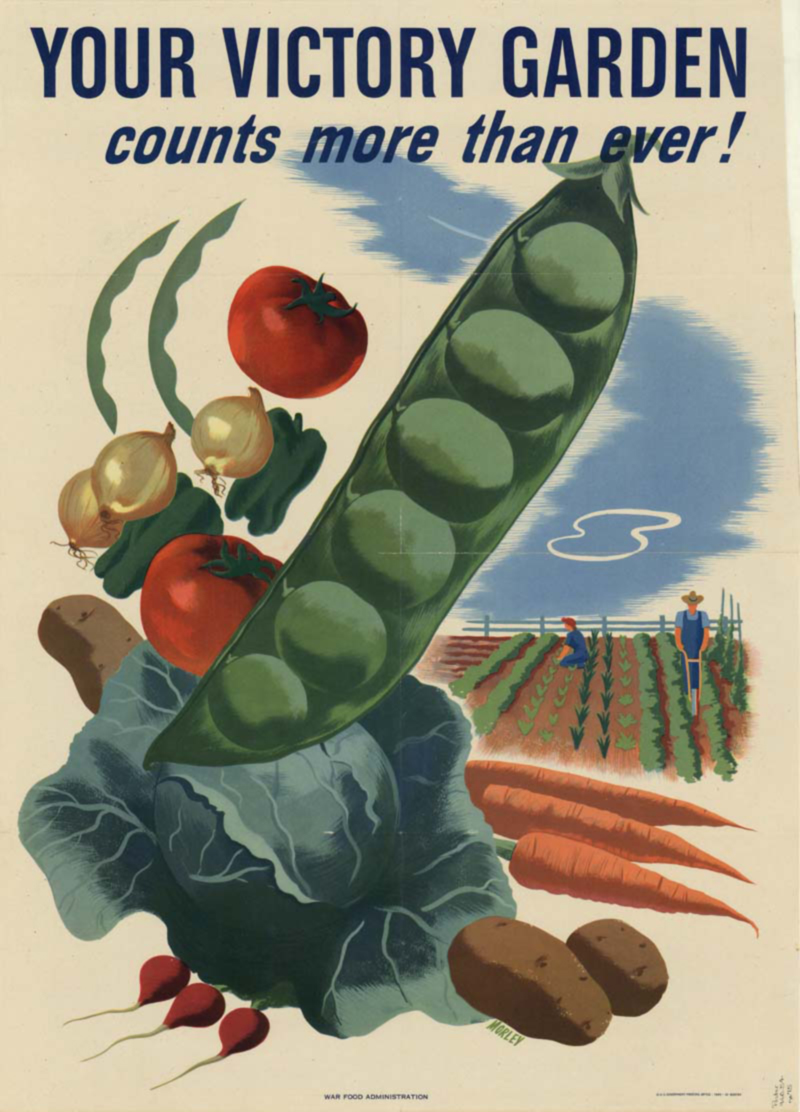
But I've otherwise been pretty disconnected from where my food comes from for most of my life, and I'd never actually pulled anything edible out of the ground before the Harmony House garden.  Perhaps that's why I was so very excited about those carrots and beets, which may be mundane at the market, but seemed magical in my neophyte gardener's hands. That week digging in the dirt really cementing my burgeoning interest in becoming responsible for some of my own food production.  Beyond the pleasure of pulling the vegetables out of the ground myself, I was also inspired by our conversations about organic agriculture and the increasing numbers of people cultivating gardens in their yards for both ecological and economic reasons (spurred on in part by the financial crisis, reminding me of the 'victory gardens' that were started in the US as part of the war effort). 


Living in the city as I do, I sadly have no yard to grow anything in.  So I'm limited to spouting seeds, which is actually really fun.  But as much as I love to watch the grains burst open after a few days of watering, it doesn't satisfy my newfound desire to dig.  Ideally I'd love to have a little bit of land to grow things in someday, whether it's my own or part of community plot.  For now I've done research into community gardens in Lyon, but there is so much more demand than plot availability.  So I've been considering container gardening, after visiting a friend in London who grows plants on her balcony.  Poking around on the Internet I've come across some really interesting ideas for growing food in small spaces, and I'll devote this fall and winter to gathering information so that I can make a plan for spring production.  In keeping with my aspirations towards mindful consumption, it just makes sense to grow my own food, to be present in every step of the process - from field to table.  And in the meantime, I'll try to get my hands dirty as much as possible wherever I can!

Saturday, September 12, 2009

A Slow Month


This title is inspired by a blog I like called 'These Days In French Life'.  It's by an American who married a French guy and moved to the countryside, only to quickly embark on a life of non-consumerism which she called  'a slow year ' (which then turned into another - I think she's on her 3rd now).  Her goal was to not spend money on anything other than food and basic utilities, and even those costs have gone way down over time.  She functions in part by growing her own food, but also by bartering, foraging, dumpster-diving, and a whole lot of serendipity.   She has a lot of great strategies for reducing both her external and internal consumption (like energy use), and her blog has really inspired me to think about what I need and how I spend my money. 

However, I've always told myself I couldn't live like her because I'm not in the countryside, and I haven't actually altered my consumption habits that much. Yet my post-vacation financial situation has forced me into 'slow' mode, like it or not.  I took all of August off since I had few students anyway, but because I'm paid hourly I had no income for the month.  My savings should have been enough to get me through August and September, but I had fewer hours in July than I expected so my travel fund was considerably less than I expected.  I went over-budget on vacation despite my efforts to be thrifty, so when I got back to Lyon I was just barely able to cover my rent and bills.  Now my account is basically at zero until October, since we are only paid once a month in France.

While Kevin kindly offered to spot me any money I needed (and he's covering most of our food expenses this month), I'm determined not to spend anything until my next paycheck.  I left the US after taking over a year to pay down a huge credit card balance, and resolved to live within my means once I got France.  It's easier here since a thrifty attitude is part of the general French culture (and I got rid of the credit card).   But spending NO money at all is extremely hard, since the city is a constant minefield of temptation. 

In fact, just before I'd resolved to live a 'slow month,' I stupidly spent some of my last few euros on low-sugar cookies in the pharmacy.  I was in there to get some more tape for my broken toe, and because I was hungry I was defenseless in front of the over-priced cookies.  They were tasteless, of course (never buy cookies in a French pharmacy) and I kicked myself over how much I paid (almost 5 euros!).   But it was a good lesson in noticing how much money I waste on little things here and there.  I've been tempted so many times this month to buy something (usually food), and it's only my empty wallet that stops me.  In desperation I even took some coins out of our change jar to get a pastry the other day!  (I'll be in trouble once Kevin reads this...)


It hasn't been as easy as I thought to buy nothing, even without a credit card.  Yet I'm determined to make it through this month of non-consumption not just out of financial necessity, but also as an exercise in mindfulness. In fact, one of the Five Mindfulness Trainings that Thich Nhat Hahn teaches relates to mindful consumption: being fully aware of what we ingest and expose ourselves to, and striving to consume only that which is good for ourselves, our community, and the earth.  


Seeing how difficult it has been to resist spending money on stupid little things has made me realize how unmindful my consumption is most of the time.  I don't spend large amounts as recklessly as I did when I had a credit card, but I do spend small quantities quite thoughtlessly on things I don't need.  While the overall impact on my bank account is not that dramatic, it does add up.  But it's ultimately my lack of mindfulness that I want to work on, and that's why the word 'slow' feels so important.  For cultivating mindfulness is all about slowing down:  whether it's slowing my eating in order to appreciate my food, slowing my steps in order to be present where I am, or slowing my thoughts long enough to truly listen to someone else.  And this month in particular, slowing my spending in order to be more conscious of how and why I consume.

Monday, September 7, 2009

Recipe for Vegan Chocolate Cake (aka Gloubi-Boulga)

Since I've had a few recipe requests for the cake I wrote about last weekend, I thought the easiest thing would be just to post it here.

It's from my favorite vegetarian cookbook, one of the few that I brought with me from the US, called "Moosewood Restaurant Cooks at Home: Fast and Easy Recipes for Any Day." It was one of my first cookbooks right out of college, back when I had no idea how to cook at all. If I remember correctly my Grandma is the one that offered it to me, along with some much-needed pots and pans. And it has served me so well over the past 13 years or so that it's now in tatters, in two separate pieces with no cover and tons of food stains all over it. But I hang onto it because it really is the best cookbook ever.

The recipe is called "Six-Minute Chocolate Cake," but my Grandma, who is very wise about all things culinary, told me that it's actually a "Depression Cake." That is, a cake that was commonly made during the Great Depression back when butter, milk, and eggs were hard to come by. It was vegan by necessity, in fact. If you google chocolate depression cake you can actually find some similar recipes.

The secret to this cake is that the vinegar reacts with the baking soda to make it rise. Pretty resourceful, I thought.

Whatever you call it, it's super easy and delicious, whether cooked all the way through or not. I made the cake again last night to bring over to a friend's house, making very sure to put the stove on the right setting. I have to say I prefer it fully-cooked, but if you want the gloubi-glouba version, just bake it for less time than called for, or on grill mode. Good luck!

Cake:
-1 and 1/2 cups unbleached white flour (I used spelt flour last night, sometimes buckwheat or whole wheat - just to change it up and be a little healthier. If you do this you may want to add a bit more liquid to compensate for the the heavier flour)
-1/3 cup unsweetened cocoa powder
-1 tsp baking soda
-1/2 tsp salt
-1 cup sugar (I use a bit less usually and always organic unrefined sugar or rapadura)
-1/2 cup vegetable oil (I tend to use canola, but I used unhydrogenated palm oil for another recipe that turned out well. The advantage is that palm oil is tasteless, while canola has a bit of a taste to it.)
-1 cup cold water or brewed coffee
-2 tsp pure vanilla extract
-2 Tablespoons vinegar

Preheat oven to 375
°F (190°C)

Sift together flour, cocoa, baking soda, salt, and sugar into a mixing bowl or directly into an ungreased 8-inch square or 9-inch round baking pan (I have neither of these so I just improvise with whatever I feel like using).

In a 2-cup measuring cup, mix together the oil, water or coffee, and vanilla (NOT the vinegar yet).

Mix wet and dry ingredients with a fork or small whisk, and when the batter is smooth add the vinegar and stir quickly. There will be pale swirls in the batter where the baking soda and the vinegar are reacting. Stir until the vinegar is evenly distributed throughout the batter, and pour into baking dish if you started in a bowl.

Bake for 25-30 minutes (less if you want a more pudding-like version). Set the cake aside to cool.

Their suggested glaze:
1/2 pound bittersweet chocolate
3/4 cup hot water or rice or soy milk
1/2 tsp pure vanilla extract

Melt the chocolate in a double boiler and stir in the hot liquid and vanilla until smooth. Pour over the cooled cake and refrigerate for 30 min before serving.

My emergency glaze:
I spooned some raspberry jelly (though you can use whatever jelly or jam you like, I'm sure)
into a saucepan and mixed it with rice milk over low heat until I got the desired consistency - pourable, but not too runny. I also added a little agave syrup to sweeten since the jelly was pretty tart and the cake had less sugar than they called for. Pour over cooled cake.

Voilà! The cookbook also suggests other toppings such as powdered sugar, cinnamon sugar, whipped cream, ice cream, fresh fruit, etc. whatever you want, basically. I usually make either the chocolate glaze (which is really rich!) or a fruity one.

Enjoy!


Saturday, September 5, 2009

Today's Moment - A Good Mistake

Today I participated in a full day mindfulness retreat at a little castle not too far from Lyon. I had planned on bringing a vegan chocolate cake for the lunchtime potluck, but as I started to cut the cake this morning to transfer it from it's baking dish to a tupperware container, I discovered to my dismay that the cake wasn't cooked underneath. A quick glance at the stove revealed the source of the problem: I had toasted garlic bread a few days before, and had never changed the stove's grill setting. So my cake only got cooked on top and was impossible to cut into pieces, leaving me with a big container of mush to deal with.

Unfortunately I realized the mistake only minutes before I had to leave, so my options were limited. No time to make a replacement dish or stop by the store, and showing up empty-handed didn't feel like an option for someone who loves potlucks as much as I do (they're actually quite rare in France, so I relish the opportunity to share food with Frenchies). In desperation I concocted a raspberry sauce by mixing a friend's delicious homemade jelly with a bit of rice milk, and I
covered the bits of cake bits and goop with it. I then patted the mixture down into a relatively smooth yet unidentifiable mass. "It's a gloubi-boulga," I complained to Kevin, using a French term to describe something strange, mushy and/or unappetizing. The expression comes from a 70s kid's show in France in which a dinosaur named Casimir made called gloubi-boulga that was repulsive to everyone but him, with ingredients such as chocolate and jelly, but also mustard and sausage. And it felt like that's what I had on my hands: a cake only a fictional dinosaur would eat!

Luckily uncooked batter isn't a problem in a vegan cake, and it tasted allright, but it was far from what I had envisioined. I felt a keen sense of diasppointment, particularly because I enjoy exposing french people to vegan baking since it's so out of left field for most folks here. In the country of buttery croissants and over 300 cheeses, it's impossible for most people to imagine life without dairy. And I was pretty sure that this vegan muck was not going to impress anyone. But I clipped my traitorous tupperware onto my bike and trudged dejectedly off to the castle.

Once potluck-time arrived, I laid my dish out with an explanatory note, since it looked so strange I imagined people avoiding it entirely. I warned that it was a ruined vegan cake that I turned into a pudding to be eaten with a spoon - but it was all organic, I wrote encouragingly!

I watched nervously as people went up to the dessert table, but much to my amazement, everyone tried some. And the folks who had seen me write the note came by to tell me how delicious it was! Little by little word spread that I had made this unusual dessert, and a number of different people came by to ask me questions about the ingredients, wanting to know how I had made it vegan - a good advertisement for vegan baking after all! Everyone insisted that it was too good to be a mistake, or that it was a mistake to be repeated. In the end, the tupperware was scraped completely clean, and I had many requests for the recipe. As it turns out, it worked out well (in the magic way that things often do at potlucks) that my dessert turned out more like a pudding, because someone else had brought a perfectly-baked chocolate cake. So my mystery mush was different and interesting and generated quite a lot of discussion.

I was completely blown away, because what had felt just a few hours earlier like a complete catastrophe had turned into a source of delight and discovery for a the retreat's participants - a very good mistake, as it turned out. And a very good lesson for me about letting go of expectations of how things are supposed to turn out, and accepting things as they are. Because that's how life is after all - a bit messy at times, but full of delicious surprises. And what may seem like a disaster at first can actually turn into something quite wonderful.